The Paths We Choose: Reflections on Wildcrafting Pathways
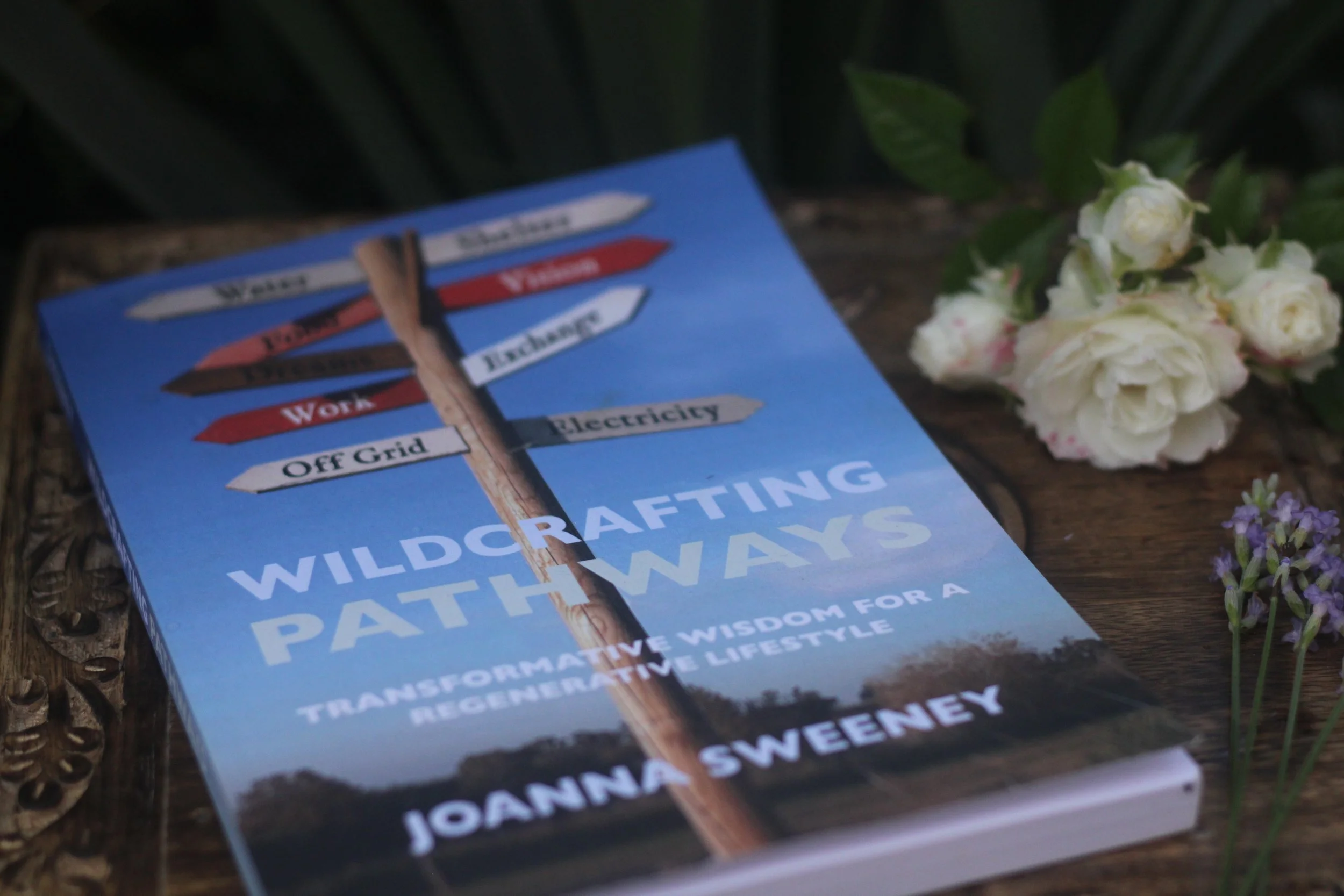
Some books are read and returned to the shelf, while others have a way of quietly following us into the hours afterwards, leaving questions behind that begin to appear in unexpected places: in the food on the kitchen table, the water running from a tap, the roof overhead, the work that fills our days, and even in the things we have come to believe are necessary for a good life. Wildcrafting Pathways: Transformative Wisdom for a Regenerative Lifestyle by Joanna Sweeney is very much the latter.
What I loved most about this book is that it does not present regenerative living as a polished ideal available only to those able to abandon modern life and disappear into the wilderness. Instead, Sweeney explores it as a pathway, asking what might happen if greater responsibility were taken for the way life is shaped, the resources relied upon, and the relationships formed with place, community and the natural world.
The structure itself feels almost like following an old wooden signpost. Water, shelter, food, work, dreams, electricity, exchange and vision each lead in different directions, yet gradually reveal themselves as parts of the same landscape. Chapters move through fundamental human needs and questions of shelter, off-grid living, food, regenerative travel, work, money, technology and community, weaving practical considerations with something much more philosophical: what does it actually mean to create a life that feels sustainable not only environmentally, but inwardly?
I found the discussions around money, work and shelter especially thought-provoking. Modern life so often teaches that security comes through accumulating more, more income, more possessions, more convenience, more certainty, while Wildcrafting Pathways gently turns the question around and asks what those forms of security may cost in freedom, time, connection and experience. It does not demand one answer, which is one of its strengths. Instead, it creates space to examine the assumptions that can become so embedded in everyday life that they are barely noticed at all.
The section on regenerative travel also stayed with me, especially the exploration of what happens when ideas such as sustainability and regeneration become trends to be marketed. Sweeney is willing to sit within those contradictions, acknowledging the realities of economics and tourism while continuing to ask what authenticity, localisation and genuine regeneration might look like.
There is a wonderful earthiness running through the book. Regenerative living is not romanticised into an aesthetic of beautiful cabins and vegetable gardens; water, waste, money, shelter, electricity and responsibility remain firmly part of the conversation.
More than anything, this is a book about relationship: with the land beneath us, with resources, with community, with work, and with the shape of a life itself. I finished it thinking less about how to escape modern life, and more about how to inhabit a life with greater intention. And that, I think, is where the real wildcrafting begins.