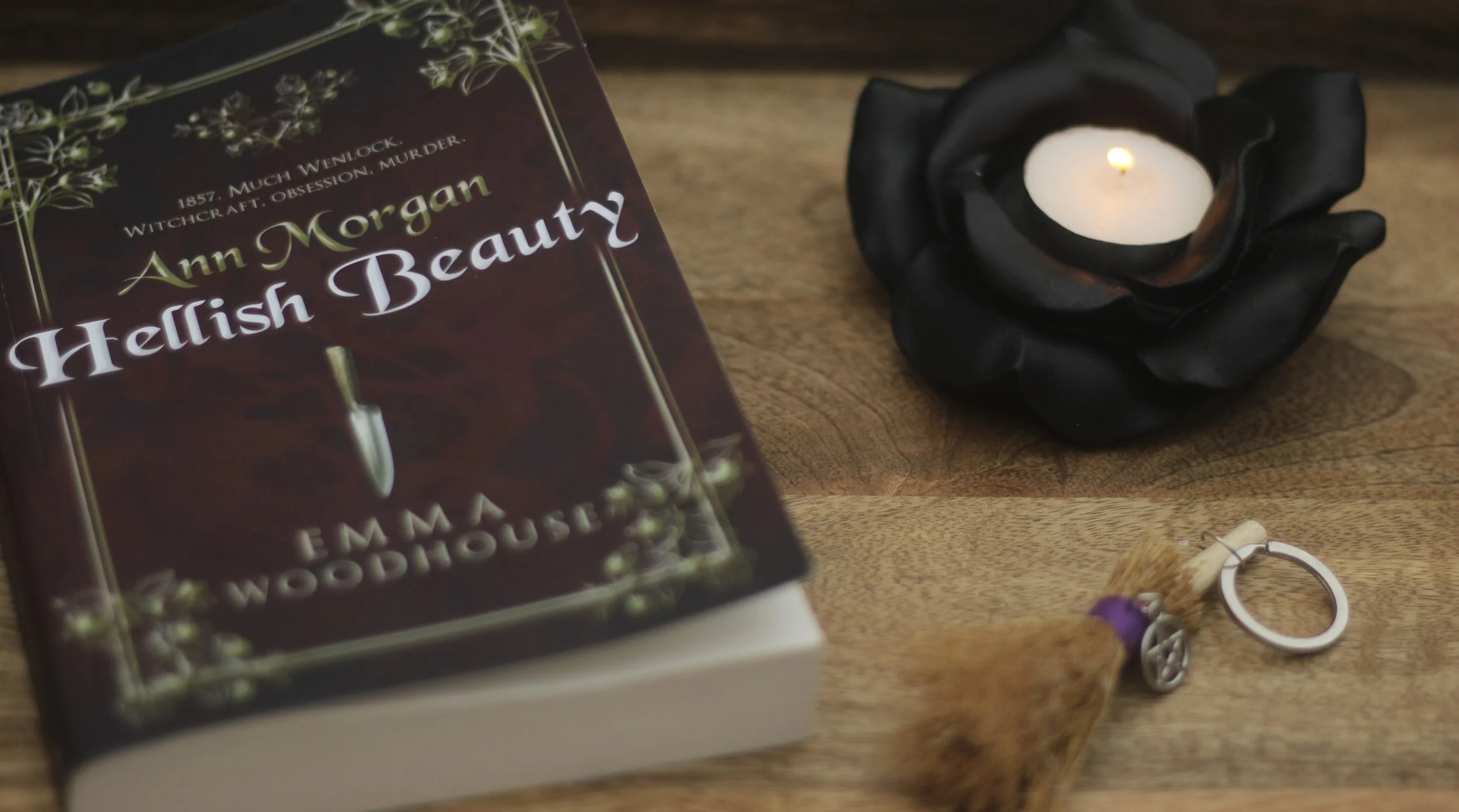
Beyond the little streets of Much Wenlock, where narrow lanes wind between old hedgerows and the wooded slopes of Wenlock Edge rise against the Shropshire sky, lies a landscape that has held the lives and stories of countless generations.
Having grown up amongst these hills and still calling Shropshire home, I have always felt a deep affection for the history and folklore woven into its countryside, for the old places whose names have become familiar through a lifetime of wandering, and the people who once walked the very same lanes. Amongst them is Ann Morgan, the Witch of Westwood Common, a woman whose name has travelled through the years, gathering mystery, suspicion and legend along the way.
In Ann Morgan: Hellish Beauty, Emma Woodhouse takes us beyond those familiar accounts, drawing upon historical records and the fragments of a life that might otherwise have remained hidden beneath the folklore, to introduce us to the woman herself. What unfolds is a richly atmospheric novel, filled with the complexities of human nature, the beliefs and traditions of rural Shropshire, and the extraordinary circumstances of a life that deserves to be understood beyond the reputation it left behind.
One of the things I loved most about Emma’s writing is the tenderness and attention with which she brings her characters to life, allowing them to become so much more than names found in old documents or figures remembered through local legend.
Ann Morgan emerges as a woman of intelligence, determination and contradiction, someone whose life was shaped by the expectations of her time, although never entirely contained by them. Emma allows us to encounter her humanity, to understand something of the world in which she lived and to recognise the complicated relationship between a woman and the community that both sought her knowledge and feared her reputation. Rather than presenting Ann through the familiar image of the village witch, Emma gives her a life beyond the folklore, filled with the ordinary concerns, desires and difficulties that belong to every human story.
Equally captivating is the way she brings Lady Catherine Milnes Gaskell into the narrative, opening another window upon Shropshire’s past and allowing the reader to step inside the world of Wenlock Abbey.
In one chapter, set in 1905, rain lashes against the windows while guests gather around the dinner table, their conversations unfolding amongst the clatter of spoons against fine china. It is a beautifully observed scene, filled with the little details that make a distant century feel unexpectedly familiar, and I could almost imagine sitting quietly amongst the guests, listening as Ann Morgan’s name entered their conversation.
These are the moments in Emma’s writing that I found especially compelling. Her characters are not confined to the historical circumstances in which we meet them. They speak, disagree, remember, wonder and reveal themselves through the smallest exchanges, until the distance between their world and our own begins to soften.
Lady Catherine is especially interesting because her presence reminds us of the importance of those who gathered and preserved local histories, recording the lives, customs and stories that might otherwise have disappeared from public memory. Through Emma’s storytelling, two women from very different circumstances become connected by the same landscape and the history it holds.
The world surrounding Ann is one of old customs, whispered beliefs and the complicated relationship between knowledge and superstition, when a reputation could be shaped as much by the fears of others as by the truth of a person’s life. Emma captures this atmosphere beautifully, allowing the folklore to remain part of the landscape without permitting it to overshadow the people at the heart of the novel.
The Shropshire countryside is wonderfully present throughout the story, not merely as a setting, but as a place shaped by generations of human lives, where the great houses and modest cottages, country lanes and isolated commons belonged to very different worlds that nevertheless existed alongside one another. Reading about places so close to home brought an added pleasure to the novel. Familiar names seemed to carry another layer of meaning, and I found myself imagining the countryside as it might have appeared to the women whose lives Emma so carefully reconstructs.
Her descriptions are atmospheric without overwhelming the narrative, and her research is woven into the storytelling with a naturalness that allows the reader to become absorbed in the period rather than feel as though they are being given a history lesson. What makes the novel so engaging is the balance between historical detail and imagination. Where records offer only fragments, Emma creates the conversations, relationships and moments of ordinary life that allow her characters to breathe, while keeping the wider historical world firmly in view.
Long after closing the book, I found myself thinking about the women at its heart, and how differently their lives might have been remembered depending upon who had been given the opportunity to tell their stories. Ann Morgan has become inseparable from the folklore of Westwood Common, while Lady Catherine Milnes Gaskell is remembered through the writings and historical interests that helped preserve something of the world around her.
Emma brings them both into the same imaginative space, allowing the reader to appreciate their individuality, their circumstances and the very different ways in which women could leave their mark upon history. For me, that is the greatest strength of Ann Morgan: Hellish Beauty. Beneath its mystery and folklore lies a deeply human story, brought to life through thoughtful research, vivid characterisation and a wonderful understanding of place.
Emma Woodhouse writes with an affection for Shropshire’s history that can be felt throughout the novel, and her ability to transform fragments of the past into living, breathing characters makes this a captivating read.
For anyone who loves historical fiction, British folklore and the lives of women whose experiences deserve a place beyond the margins of history, this is a book to settle down with on a long autumn evening, when the light has faded beyond the windows and the old countryside seems very close indeed.