Beneath the Longest Sky
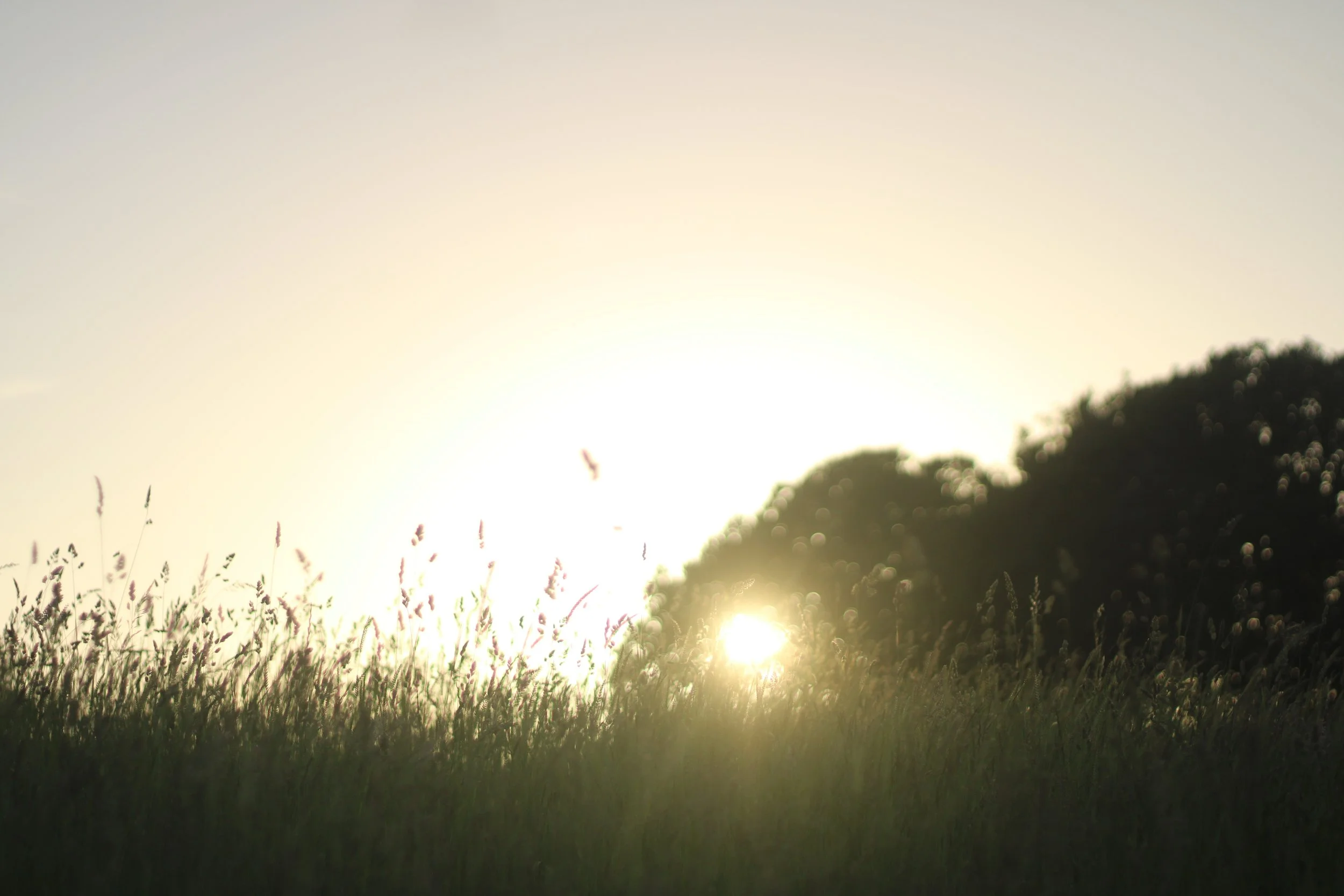
By late June, the countryside seems to have settled into itself. The frantic unfurling of spring has passed. Leaves have reached their full size. The hedgerows stand thick and green. Wild roses spill through gateways and along field edges, their petals glowing softly in the sun. Elderflower hangs in creamy clusters amongst the branches, scenting the air long before it comes into view.
It is usually somewhere amongst these ordinary moments that I realise midsummer has arrived. Perhaps whilst walking a familiar path and noticing how high the grasses have grown or standing quietly in the garden with a cup of tea cooling between my hands. The swallows are still flying. The blackbirds are still singing. The horizon continues to hold the light. And suddenly, without fanfare or announcement, the season reveals itself.
What I notice most at this time of year is not the flowers, although they are everywhere, nor the abundance of green that seems to spill from every hedge and field. It is the light. For a few precious weeks, the world seems suspended within it. The days stretch wide. Morning arrives early and gently. Evening lingers long beyond expectation. The landscape appears to gather and hold the sunlight, as though reluctant to let it go.
There is a quality to midsummer light that feels entirely different from that of any other season. In winter, light arrives cautiously and departs early, precious because it is scarce. In spring, it feels bright and hopeful, carrying the promise of what is yet to come. But midsummer light feels settled somehow. Mature. Unhurried.
The sun sits lower in the sky during the earliest and latest hours of the day, casting long shadows across the landscape and turning ordinary things beautiful. Grasses become strands of gold. Cobwebs hidden amongst the hedgerows suddenly reveal themselves. The trunks of old trees glow with warmth. Even familiar paths seem transformed, softened somehow, as though viewed through memory rather than sight alone.
It is a light that invites lingering. A light that encourages wandering a little further than planned and staying outside a little longer than intended. I think this is one of the reasons I find myself drawn outdoors so often at this time of year. Not always at sunset, but frequently in the quiet hours of the morning when the day still feels fresh and full of possibility. The garden is usually the first place I notice it. Sunlight filtering through leaves. Dew gathering on lady’s mantle. Bees moving amongst the lavender before the warmth of the day has fully arrived. The scent of herbs rising as I brush past them.
There is a clarity to summer mornings that I love. The light feels different then too; softer than midday and somehow cleaner, illuminating details that might otherwise pass unnoticed. Tiny droplets of dew catch the sun and briefly resemble glass beads scattered amongst the grass. The edges of leaves seem to glow. Flowers appear brighter, more luminous somehow, before the day settles into its usual rhythm. It is impossible to hurry through a morning like that without missing something.
Often, I step outside intending to complete a simple task and find myself distracted by a self-seeded calendula, a butterfly resting on a flower head, or the way the sunlight has caught a rose petal. Minutes become longer than expected. The kettle waits. The to-do list remains untouched. And for a little while, the only thing that seems to matter is paying attention. Perhaps that is what the light does at this time of year. It draws our gaze towards the details. Towards the small moments that might otherwise pass unnoticed. Towards the beauty that has been there all along, waiting patiently for us to slow down enough to see it.
When I was younger, I thought the solstice was something that happened on a particular date. A seasonal celebration. A point marked neatly on a calendar. Now I think it arrives through a collection of moments. A blackbird singing from the hawthorn long after sunrise. The scent of wild rose drifting across a warm path. A sky that remains luminous long after the sun has disappeared beyond the hills. The feeling of standing beneath an old oak tree and realising there is still enough light to see every leaf. The warmth of a wooden gate beneath your hand. The last bees moving through the foxgloves. These are the moments that tell me the season has reached its fullness. One morning after another. One lingering sunset after another. One quiet reminder after another that the year has arrived at its brightest point.
Perhaps this is why I find the solstice so moving. Not because it marks the longest day, but because it asks us to notice it. To pause long enough to witness the abundance surrounding us. To step outside and recognise that the light we have been moving towards since winter has finally arrived. To stop looking ahead for a moment and simply stand within the season that is here. And, perhaps most importantly of all, to allow ourselves to arrive with it.
One of the plants I always find myself noticing at midsummer is St John’s Wort. Her golden flowers seem to gather sunlight from the landscape itself, glowing from grassy banks and field edges as though tiny fragments of the sun have settled amongst the green. There is something unmistakably solar about her presence.
For generations, people looked closely at plants, believing that their appearance might reveal something of their character and purpose. St John’s Wort rewards that kind of attention. Hold one of her leaves against the light and countless translucent dots appear across the surface, tiny windows through which the sun seems to shine. Crush a flower gently between finger and thumb and a deep crimson stain emerges where moments before there was only gold.
For centuries she was gathered at midsummer and carried home in bunches and garlands, associated with protection, blessing, and the power of the sun at its height. Standing beside her now, with the longest day approaching and the landscape bathed in light, it becomes easy to understand why. Yet for all her brightness, it is another plant that often captures my attention.
Mugwort waits at the edges of things. Along pathways and roadsides, amongst long grasses and forgotten corners, her silver-backed leaves catch the light and seem almost luminous. Whilst St John’s Wort belongs to the bright certainty of the sun, Mugwort feels woven from threshold places. She is the plant of travellers, dreamers, and wanderers. Whenever I pass a patch of Mugwort, I am reminded that the solstice itself is a threshold. The longest day is also the beginning of the return. The light reaches its peak and then begins, almost imperceptibly, its gradual journey towards darkness. There is no sadness in this. Only rhythm. The same rhythm that moves through flowers and trees, tides and seasons, our own lives, and the lives of those who came before us.
Perhaps this is why I find myself gathering things at midsummer. Not only herbs. Not only flowers. But moments. The scent of rose carried on warm air. The sight of sunlight filtering through elder leaves.
This year I have found myself reaching for lemon balm, lemon verbena, and rose when making tea. Their fragrance seems to contain something of the season itself. Brightness. Warmth. Softness. As I blend them together, I find myself thinking about all that has quietly flourished since winter. Not the grand achievements that so often demand attention, but the smaller things that are easily overlooked. A new idea beginning to take shape. A little more confidence than there was before. Moments of joy that arrived unexpectedly on ordinary days. Perhaps this is what the solstice invites from us. Not elaborate rituals. Not perfection. Simply attention. A willingness to notice what has grown. To recognise what has blossomed. To give thanks for what has flourished. To gather a little of the light whilst it is here.
Soon enough the roses will begin to fade. Elderflowers will give way to berries. The first hints of autumn will appear amongst the hedgerows. The wheel will continue its turning, as it always has. But for now, the light remains. And that feels worth noticing.